When you walk through Spokane's tree-lined neighborhoods, past its craftsman bungalows and along the thundering falls downtown, you're walking through a city shaped by extraordinary history. Here's the story of how Spokane became the vibrant place you'll find today.
The Spokane People
Long before European settlement, the area around the falls was home to the Spokane Tribe — the "Spokan" people, whose name translates to "Children of the Sun." The falls themselves, called "Stluputqu" (swift water), were a vital gathering place for salmon fishing and trade among indigenous nations across the Inland Northwest. The Spokane, Coeur d'Alene, and Kalispel tribes all have deep roots in this region.
Fur Traders & the Frontier Era
The first European presence arrived with the fur trade in the early 1800s. The Spokane House trading post, established by the North West Company in 1810, was one of the first Euro-American settlements in what would become Washington state. For decades, the region remained frontier — vast, wild, and largely untouched.
The Railroad Transforms Everything
Spokane's modern story begins with the railroad. When the Northern Pacific Railway arrived in 1881, it transformed a tiny settlement near the falls into a booming frontier city almost overnight. The population exploded. Mines in the Silver Valley of Idaho and across Eastern Washington shipped their ore through Spokane, earning the city the nickname "Capital of the Inland Empire."
By 1889, Spokane was a bustling city of wooden buildings, saloons, and ambition.
The Great Fire of 1889
On August 4, 1889, a fire that started in a railroad car spread rapidly through Spokane's wooden downtown. Within hours, 32 blocks — essentially the entire business district — were destroyed. But Spokane rebuilt almost immediately, this time in brick and stone. Many of the handsome buildings you see downtown today date from this remarkable period of reconstruction.
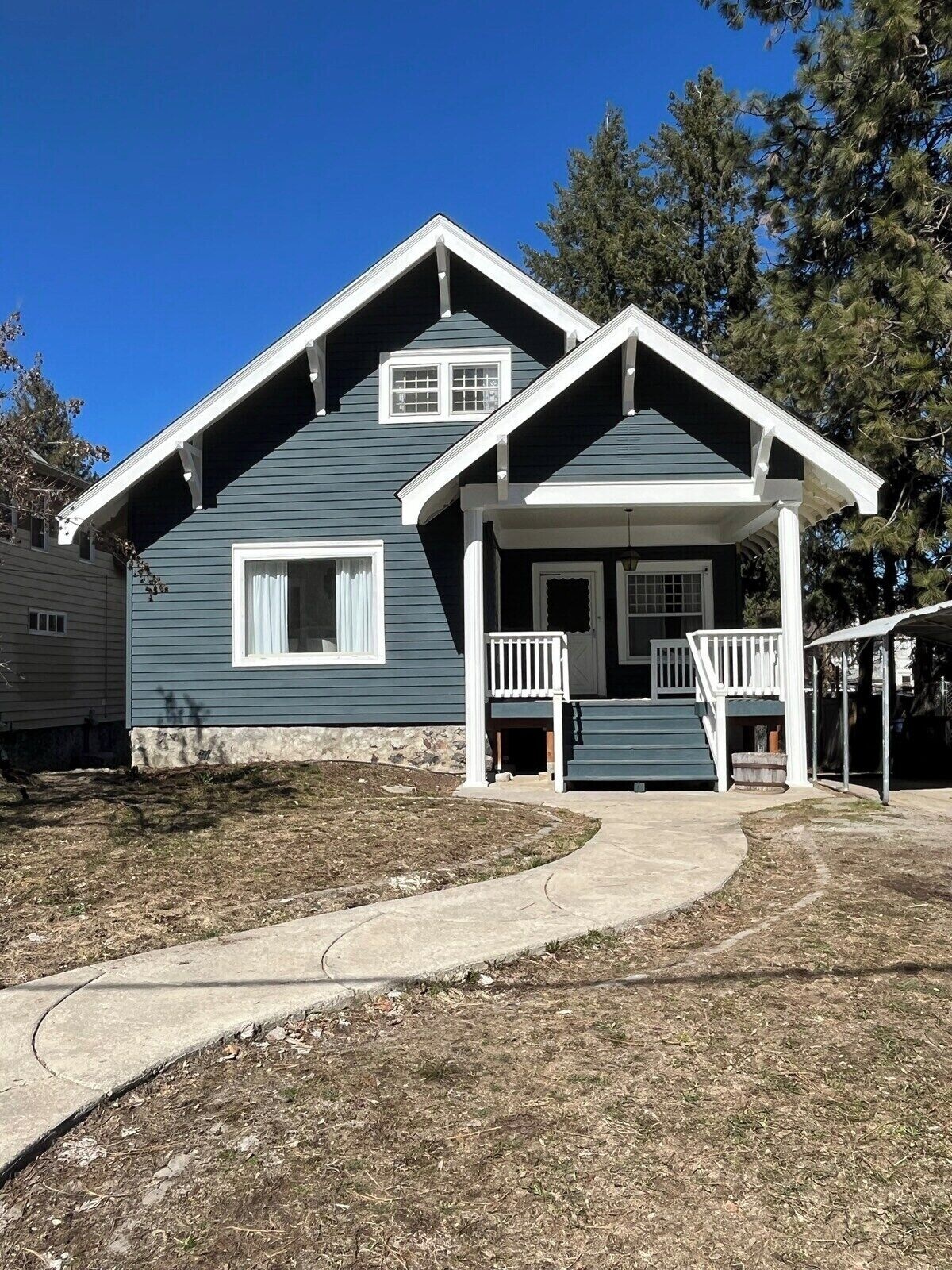
The South Hill neighborhood where Manito Bungalow sits was developed in the years following the fire, as Spokane's growing middle class built craftsman homes on the quiet, tree-lined streets above the city center. Our 1920s bungalow is part of that legacy.
Expo '74 — Spokane Goes Global
Perhaps the most transformative moment in modern Spokane history was Expo '74 — the World's Fair held right in the heart of downtown. Spokane was the smallest city ever to host a World's Fair, and the theme was prophetic: "Celebrating Tomorrow's Fresh, New Environment."
The fair transformed an ugly tangle of railroad yards along the Spokane River into what is now Riverfront Park — 100 acres of public space surrounding the falls. The iconic clock tower, the Looff Carrousel, and the river walks all trace back to this visionary project. Over 5.2 million visitors attended between May and November 1974.
The City Today
Modern Spokane is a city of roughly 230,000 people (over 600,000 in the metro area) that consistently ranks among the most livable mid-size cities in America. The craft brewery scene has exploded — there are now over 40 breweries, and we've written about our favorites. The restaurant scene has evolved from meat-and-potatoes to include destinations like Wooden City and Rüt.
The events calendar is packed: Bloomsday draws 40,000+ runners each May, Hoopfest takes over downtown every June, and Gonzaga basketball has put Spokane on the national sports map.
And the South Hill — our neighborhood — remains one of the most beautiful residential areas in the Pacific Northwest. Tree-lined streets, historic craftsman homes, Manito Park one block away, and a quiet, walkable vibe that feels worlds away from the bustle of downtown.
Experience the History Yourself
When you stay at Manito Bungalow, you're staying in a piece of Spokane history — a lovingly restored 1920s craftsman on the South Hill, one block from the park that's been the neighborhood's heart for over a century.
Ready to explore Spokane's story? Book your stay at Manito Bungalow. Prefer a platform? Find us on VRBO or Airbnb.